
The product
One cycle of your money, start to finish.
Nine chapters, in the order they happen. What Lefover counts, what it sets aside, what it watches, and when it speaks.
A subtraction, not a guess.
The home number is what is safe to spend: money in checking, minus the bills still due this cycle, minus what you set aside. Nothing else is counted.
Not counted, on purpose
- Credit card balances. They are watched for utilization and never touch this number.
- Savings accounts. They are not linked at all. Lefover only watches the money you spend from.
Bills are detected from the bank connection and reserved automatically. No manual entry, ever.
Time runs payday to payday.
A cycle opens the day your pay actually lands and closes when the next one does. Not the first of the month, the day the money arrives.
Anchored to real paydays
When pay lands, a cycle begins, and the bills still due before the next payday are reserved out of it. A late paycheck moves the cycle with it, because the anchor is the deposit, not the calendar.
Several incomes, different schedules
Paid every other week from one job and monthly from another, both count. Cycles anchor to several incomes on different schedules, without you typing anything.
No reliable paycheck, runway mode
Runway mode gives a daily allowance to a horizon you choose. Pick the date you are steering toward, and what you have becomes an even daily pace until then.
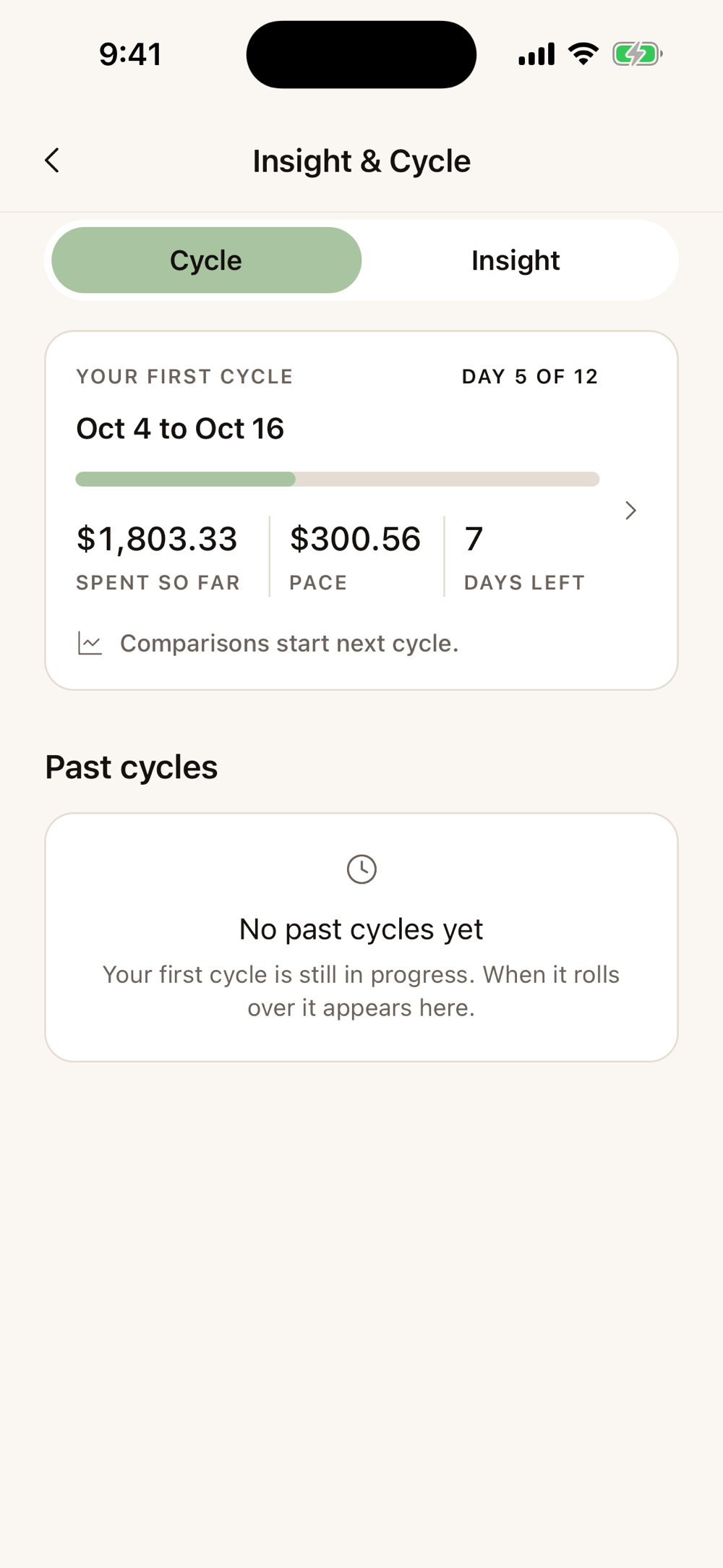
Reserved before you can spend it.
Bills are detected from the bank connection and reserved automatically. No manual entry, ever. By the time you look, the number already has them set aside.
A missed bill is not smoothed over. It follows you into the current cycle and is flagged there, never silently stacked onto the next one.
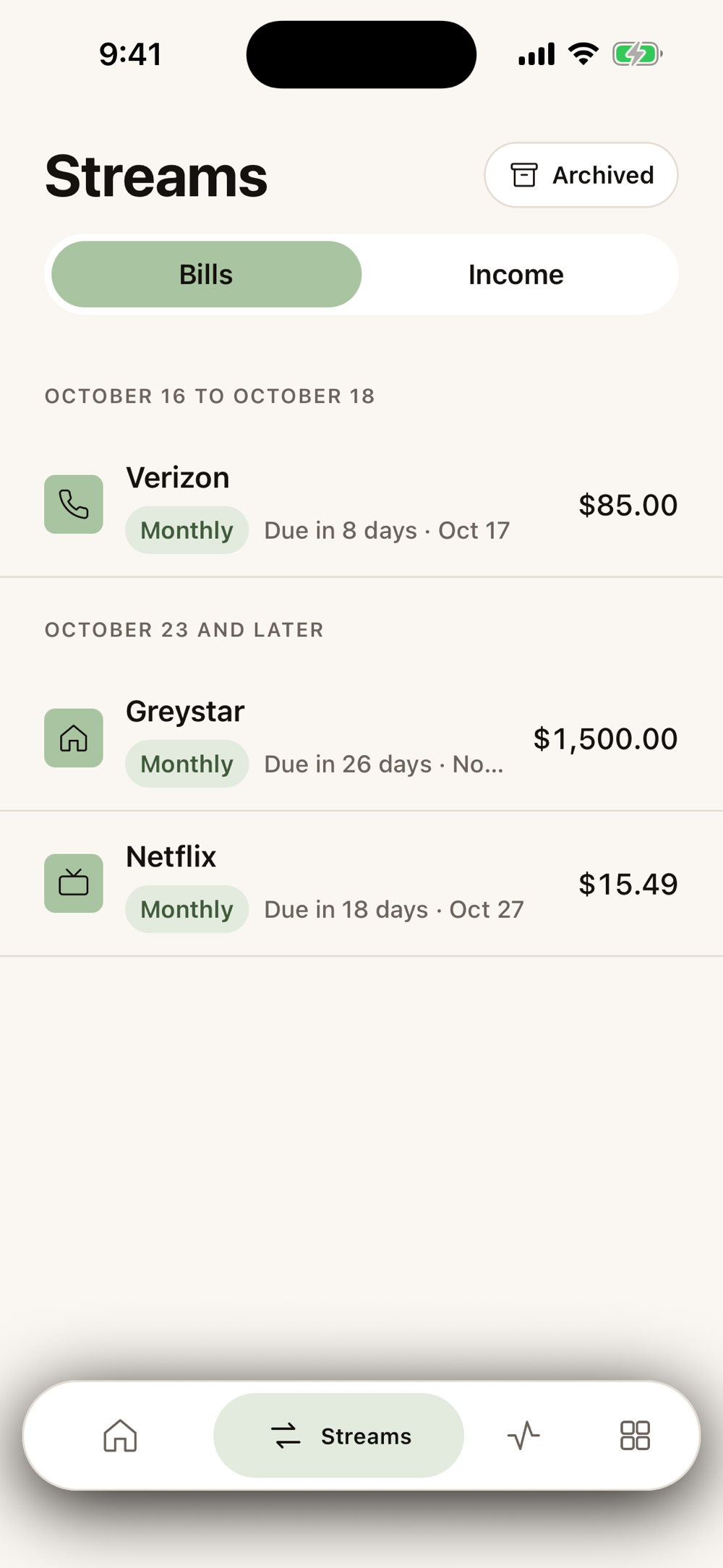
You name it. Lefover holds it.
A reserve is money set aside on purpose. Name it, give it a spending category, and the amount is held out of safe to spend for the cycle. Groceries, fuel, the vet visit you already know is coming.
Nothing is drawn without you. When a matching charge arrives, Lefover asks, and you assign it to a reserve or dismiss it. Only assigned spending draws a reserve down.
What is not spent is released when the cycle closes. A repeating reserve is set aside again when the next cycle opens, and a one-time reserve retires.
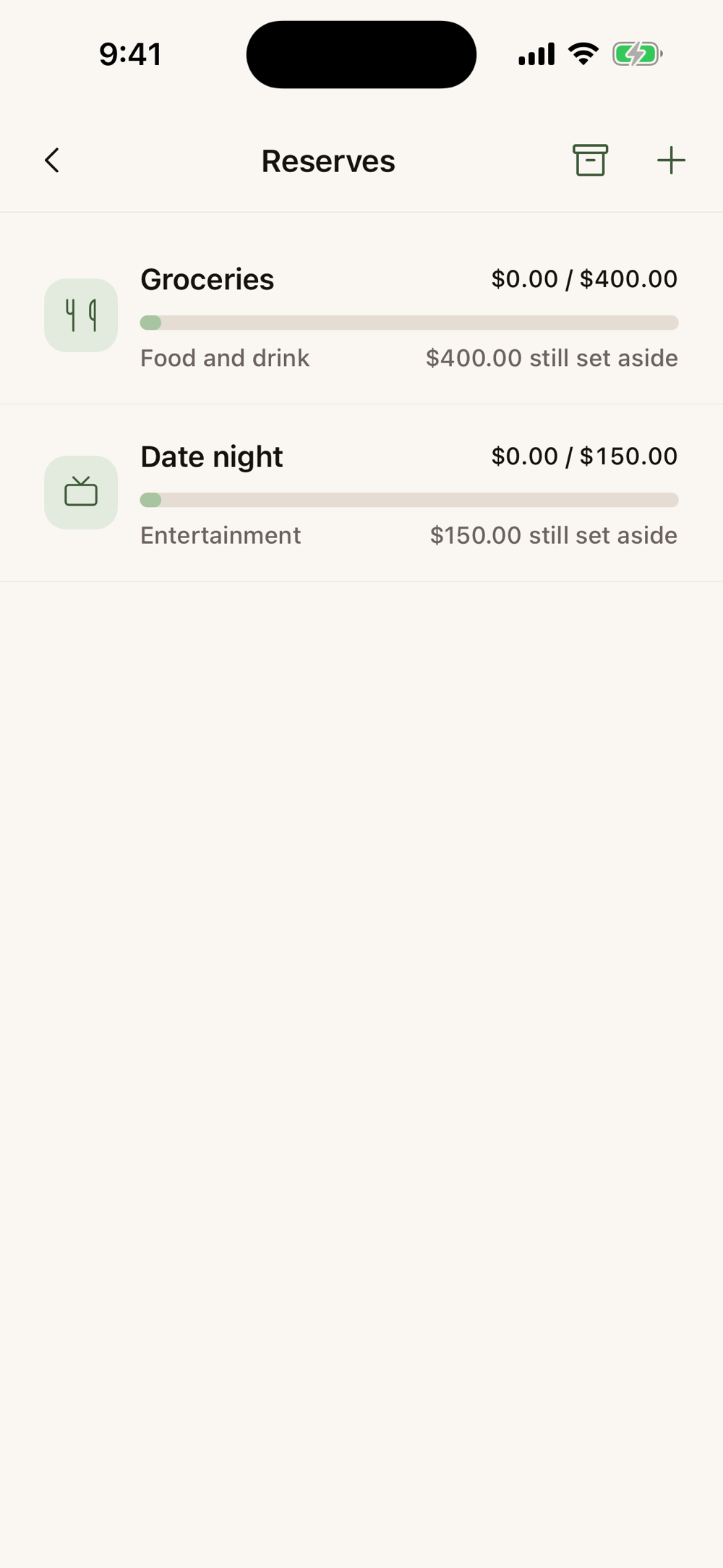
You save. Lefover notices.
Pick which paychecks fund a goal. When a matching transfer leaves checking, Lefover spots it, and you count it with one tap.
Lefover cannot initiate the transfer and never touches the money. It recognizes the saving you already did.
Money never moves. Lefover only watches.
Measured against your own average.
Six views of your history, each one relative to you. No strangers' benchmarks.
Kept per cycle
A running history of what was left when each cycle closed.
Pace
Whether this cycle is running ahead of your own average or behind it.
Spend consistency
How steady your spending holds from cycle to cycle.
Bill reliability
How dependably each bill arrives when it is expected.
Top categories
Where the money went this cycle, ranked.
Income trend
The direction your income is moving across recent cycles.
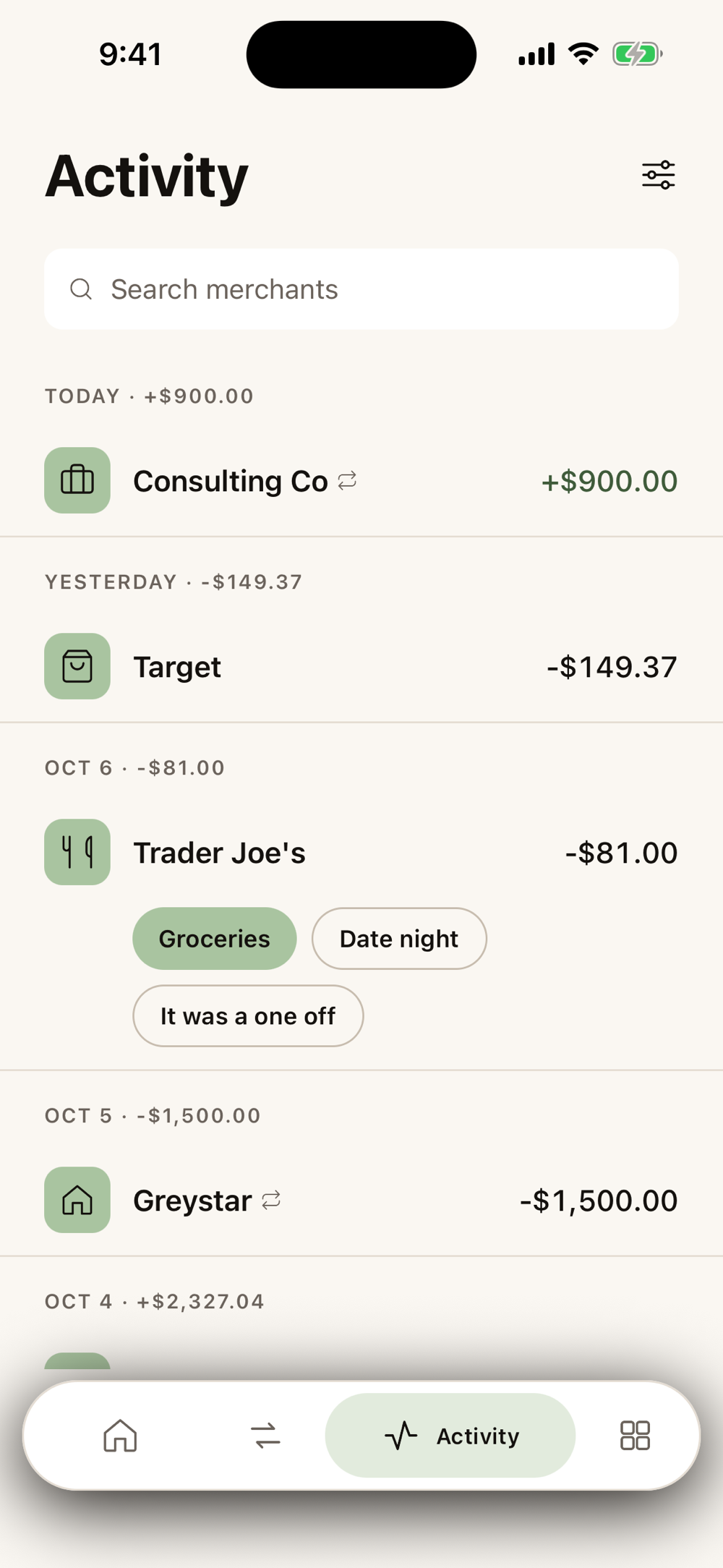
Every date is your local day, in your timezone.
Watched from the side.
Credit cards are watched for utilization, with an alert threshold you set for each card. Cross it, and Lefover tells you.
Their balances never enter the leftover math. A card can warn you here without ever shrinking the number on the home screen.
It speaks when something needs you.
No streaks, no nudges to open the app. A message arrives when the money itself has news.
Every message is about your money, never about your engagement.
The next payday can be your first cycle.
A 14-day trial. One plan. Up to 3 accounts.